10 golden rules of email etiquette
Fences might separate you from your neighbors, but following fence etiquette brings you together. Keeping your neighbors informed throughout installation ensures you avoid disputes – and you both get a good fence out of it https://heartsewcreative.com/.
Most local governments have specific requirements for the height, style, and other aspects of fences, and if you have a homeowner’s association (HOA), you should check if they have any rules regarding fencing as well. You want to know everything so you can avoid inadvertently breaking a law—or offending a neighbor.
Once you’re armed with the facts about your fence, property lines, and the local requirements, you’re ready to have all the fence conversations with your neighbor. Here are the general rules of fence etiquette that will avoid an all-out Neighbor War:
5 rules of golf etiquette
I blame scramble tournaments for the loss of this etiquette practice. Standing on a player’s target line, no matter how far back or how far behind the hole you are, is frowned upon. Sure, it’s not officially in the rulebook—Rule 10 only states your caddie is not allowed to stand there—but it should be observed. However, many golfers play in scramble tournaments, and gathering together to assess and watch every shot has become common practice.
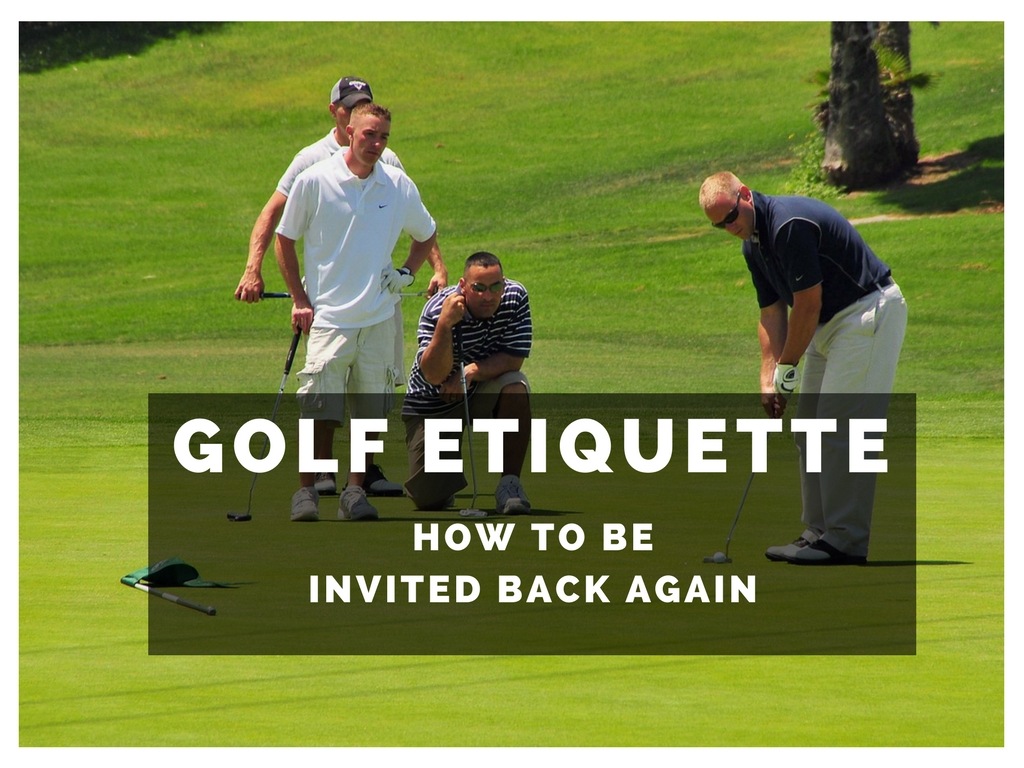
I blame scramble tournaments for the loss of this etiquette practice. Standing on a player’s target line, no matter how far back or how far behind the hole you are, is frowned upon. Sure, it’s not officially in the rulebook—Rule 10 only states your caddie is not allowed to stand there—but it should be observed. However, many golfers play in scramble tournaments, and gathering together to assess and watch every shot has become common practice.
Don’t stand directly behind the ball in line with the target or at 45 degrees over the golfer’s shoulder. This distracts the golfer. Directly behind the player can create a dangerous situation. The best place to stand is 90 or 45 degrees to the player’s chest and 2 to 3 yards away.
When playing rounds of golf with friends, many people are tempted to shoulder their clubs and leave their bags on the tee box. This means that other golfers behind them must find a spot to place their bags, which can be difficult and distracting. Having bags in the way of someone’s striking vision can also interfere with their ability to play a good shot.
Golf etiquette is a major part of the game. From ensuring you stay quiet when someone’s taking their shot to properly maintaining your course, adhering to proper golf etiquette can help make everyone’s round more enjoyable and respectful. In this blog post, we’ll look at some key tips for managing your behavior on the golf course and learn why it’s important to respect other players and show appreciation for the game itself.
Again, this doesn’t seem like something worth changing the rules over. I’m only talking about PGA players here when I say just wear the pants. You’re professionals. It’s not that hot no matter where they go. This is one of the cool traditions because I remember as a kid wearing pants to junior tournaments to act more professional and try to intimidate the other kids.
Rules of golf etiquette
At My Golf Essentials, we’re passionate about providing premium health supplements designed to support your health and wellness journey—whether you’re boosting daily vitality, improving performance, or aging well. The information on this website is for informational purposes only and is not intended to diagnose, treat, cure, or prevent any disease. This content, including any responses provided by our chatbot, does not constitute medical advice. Always consult with a healthcare professional before beginning any supplement or wellness program.
In casual golf, Ready Golf has certainly become the custom, meaning that playing out of order is fine as long as you are not impeding another player. (Tradition has always been that the player farthest away from the hole go first, but that can often slow down play.) If you’re ready to hit, go for it. The one exception is on the tee when one of the players in your group has made birdie or eagle on the previous hole. In this case, it’s always preferable, even if that player isn’t ready, to say “birdie goes first,” at least making the offer.
The World Handicap System enforces a maximum score of net double-bogey on any hole. That means once you’ve exceeded par, plus any handicap strokes you get on a hole, plus two, it’s time to pick up and move on to the next hole.
If you make a divot (creating a crater in the ground with your club), either replace it or fill it with provided sand. Different courses have different rules depending on the type of turf (replace or fill). Also, if you make a pitch mark on the green with your approach shot, be sure to repair it with a tee or ball mark repair tool.
Rules of etiquette
Before you hit send to ship an email or text, always take a moment to proofread what you’ve written. Don’t skim your message. Read every word you’ve written to make sure they’re all contextually correct and spelled properly. When you’re done, think about your message to ensure it communicates exactly what you want to say in its entirety. Remember, recipients have nothing to go on other than your words, so your written messages must be precise, accurate, concise, and correct.
Too often, people hand out their business cards when they’re making introductions, especially when they’re introducing themselves. Unless you’re on a sales call, keep your business cards in your pocket or purse unless someone specifically asks for your contact information. Wantonly handing out your cards may come across as aggressive, and it infuses casual networking opportunities into work-like exchanges.
When you’re sending business emails and text messages, you need to remember that the person on the receiving end has no context for your message beyond your words. The person won’t be able to make any inferences about the intent of your message based on your tone of voice or body language. With the majority of messages being relayed by nonverbal cues like posture and hand gestures, it’s wise to keep written messages short and to the point to avoid unintended misinterpretations.
No matter how relaxed the business culture might be in your office, there is no excuse for poor hygiene. Whether you’re a front-line worker, an occupant of the C-suite, or you land somewhere in between, good hygiene is an absolute must. It won’t matter what clothes you wrap yourself up in if you smell, your hair’s a mess, you have bits of your last meal visibly stuck between your teeth, or you have dirt trapped beneath your fingernails.
If you’re in doubt about the way you should dress, take cues from your co-workers or your boss. Or you can simply keep the following adage in mind, which is to dress for the job you want, not the job you currently have.

